
Milky Mist Dairy Food Ltd has set the price band for its Rs 1,553 crore Initial Public Offering (IPO) at Rs 133-140 per share, with subscriptions opening on August 11 and closing on August 13.

The challenge thrown by the youth movement creates the opportunity for a more consequential debate on India's economic trajectory because it must remain centered on India's youth as its driving impulse, asserts former foreign secretary Shyam Saran.

The Indian government has clarified that consumers will not be charged for UPI transactions, and most merchant transactions will also remain free. This comes amidst speculation following an amendment to the Payment and Settlement Systems Act, 2007. Any future merchant discount rate (MDR) would be nominal, threshold-based, and aimed at ensuring UPI's long-term sustainability and infrastructure development.

The CEO of the National Health Authority, Sunil Kumar Barnwal, highlighted BRICS nations' shared aspiration for connected, patient-centric, and resilient healthcare systems through digital health infrastructure and responsible AI. Discussions at the 16th BRICS Health Ministers' meeting focused on overcoming challenges like limited interoperability and workforce constraints, with countries like Brazil and Indonesia sharing successful digital health initiatives.

BikeWo Green Tech and Kwik Flite Support have signed an initial pact to develop an integrated air cargo, aviation logistics, and multimodal freight platform. This collaboration aims to combine road mobility with aviation capabilities to serve various industries, focusing on high-value and time-sensitive logistics across India, including Tier-II and Tier-III cities.

Fitch Ratings forecasts a 9 per cent aggregate revenue increase for rated Indian corporates in the current fiscal year (FY27), a stronger outlook compared to the 5 per cent estimated for FY26, which is expected to keep credit metrics stable despite potential global and domestic challenges.

IIT Madras is hosting the 3rd Digital India RISC-V (DIR-V) Symposium 2026 in partnership with the Ministry of Electronics and Information Technology and RISC-V International. The symposium aims to unite stakeholders from government, industry, and academia to advance India's semiconductor innovation, focusing on indigenous processor technologies, secure computing, hardware innovation, and AI, aligning with the government's vision for India as a global semiconductor hub.

Despite aggressive expansion, India's solar power sector faces significant hurdles from rising regional disparities in installed capacity and a looming manufacturing glut due to overcapacity in domestic solar equipment production, potentially leading to consolidation and pricing pressures.

The Maharashtra government has approved the deployment of sovereign artificial intelligence solutions from Sarvam AI for its departments, with a two-year outlay of Rs 11.26 crore. This initiative includes the Indus AI workspace for 2,500 users, ensuring government data remains within India, along with citizen outreach agents and speech models for the MahaAI platform.

Indian-origin tech executive Uday Ruddaraju has been appointed Chief Technology Officer, Compute at OpenAI, a year after leaving Elon Musk's xAI. Ruddaraju, an alumnus of Hyderabad's Chaitanya Bharathi Institute of Technology, announced his new role on LinkedIn, highlighting OpenAI's mission to build the world's largest compute footprint for frontier AI.
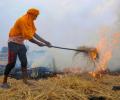
The Commission for Air Quality Management (CAQM) has directed Punjab, Haryana, Uttar Pradesh, and Rajasthan to implement drone-based surveillance to monitor and prevent stubble burning. This initiative aims to counter late-evening burning incidents that evade satellite detection, leveraging drone technology for real-time monitoring, accurate detection, and evidence collection to ensure effective enforcement against agricultural residue burning.

Andhra Pradesh and Punjab National Bank (PNB) have signed an MoU to establish the PNB Quantum Finance Hub at Amaravati Quantum Valley. This initiative aims to foster innovation and adopt next-generation technologies like AI and Quantum Computing in the banking sector, focusing on cybersecurity, fraud detection, and customer experience.
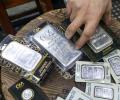
The Bureau of Indian Standards (BIS) is preparing to significantly increase its silver jewellery testing capabilities and expand its national laboratory network, driven by a shift in consumer demand from gold to silver and a broader push for enhanced product certification and surveillance.

Karnataka Chief Minister D K Shivakumar announced the establishment of India's first government-driven Artificial Intelligence University and an AI Hub in Bengaluru. This initiative aims to position Karnataka as a global leader in responsible AI innovation, fostering talent, research, and collaboration. The state seeks to become an AI-native state, leveraging AI to improve governance and daily life across various sectors.

Amazon CEO Andy Jassy announced an additional USD 13 billion investment in India, bringing the company's total capital commitment to USD 48 billion by 2030. This significant investment will primarily focus on expanding AI and cloud infrastructure, supporting job creation, boosting e-commerce exports, and digitising small businesses, aligning with India's growing digital economy.

The move comes amid growing demand from organisations in India for local access to Claude.
Chinese President Xi Jinping has called for global collaboration in Artificial Intelligence development, stating it should be a "symphony" rather than a "solo performance." His remarks came at the World Artificial Intelligence Conference (WAIC) in Shanghai, where 29 countries also signed an agreement to establish the World Artificial Intelligence Cooperation Organisation (WAICO), an independent intergovernmental body headquartered in Shanghai. China also pledged 5,000 AI research projects and training for developing nations.

'We can integrate AI and tech into education, but that is just a means and not an end.' 'Ultimately, we need to control what happens in a classroom and we need to let teachers innovate their teaching style to suit the needs of Gen Z and beyond.'

Dell Technologies is significantly expanding its domestic manufacturing in India, with a majority of its servers now produced locally, driven by data sovereignty and AI adoption. The company also launched new AI infrastructure solutions, including PowerStore Elite, designed for secure on-premises data management and AI workflows, while asserting that AI creates more jobs.

Prime Minister Narendra Modi celebrated 11 years of the Digital India initiative, highlighting its role in redefining governance, empowering citizens, and accelerating all-round development. He emphasised its impact on digital payments, direct benefit transfers, and expanding digital public infrastructure, making technology a powerful instrument for 'Ease of Living' across India, including tier-2 and tier-3 cities.

Indian pharmaceutical companies are not rushing to relocate manufacturing to the United States despite former President Donald Trump's renewed threat of tariffs up to 200 per cent on imported generic drugs. Instead, they are leveraging existing US plants, contract manufacturers, and making selective investments in complex products while maintaining India as their primary production hub.

Mercedes-Benz India plans to continue introducing hybrid vehicles, including the new AMG E 53 plug-in hybrid EV, to meet consumer demand, viewing hybrids as a crucial bridge to full electrification despite the absence of supportive government policies.

While charger deployment is yet to begin, the scheme has supported the sale of 2.65 million EVs as of July 22.

Barclays Global Service Centre India MD & CEO Praveen Kumar has urged Indian banks to modernise their technology architecture and build AI-based defence systems to counter emerging cyber threats posed by AI tools.

Organisers of the upcoming BWF World Championships have undertaken extensive upgrades at the Indira Gandhi Stadium in Delhi, including anti-bird measures, non-toxic gels, and even 'monkey whisperers', to prevent a repeat of the hygiene and disruption issues experienced during the India Open earlier this year.

Chinese President Xi Jinping called for global collaboration in artificial intelligence development, emphasising a "symphony of global collaboration" over a "solo performance" by any single nation. Speaking at the World Artificial Intelligence Conference in Shanghai, Xi highlighted the need for ethical AI governance, shared prosperity, and addressing challenges like the widening digital divide. He also announced China's commitment to support developing countries with 5,000 AI research projects and training programmes. The event also saw 29 countries sign an agreement to establish the World Artificial Intelligence Cooperation Organisation (WAICO) in Shanghai.
Senior Indian officials highlight the indispensable role of the private sector in translating India-US cooperation in AI, semiconductors, quantum technologies, and critical minerals into tangible outcomes. The collaboration aims to build trusted, resilient technology ecosystems and position India as a global electronics and semiconductor hub.
A cybersecurity expert warns that cyberattacks are increasingly targeting critical infrastructure, posing direct risks to human lives beyond mere data theft. The convergence of IT and OT expands the attack surface, making sectors like aviation, transport, and public utilities highly vulnerable.

Prime Minister Narendra Modi shared a nostalgic moment with former Australia captain Steve Waugh during a visit to the Melbourne Cricket Ground (MCG) on Friday, presenting him with a photograph from their first meeting more than two decades ago when Modi was the Chief Minister of Gujarat.

NITI Aayog member Abhay Karandikar stated that the US government's new export controls, which led AI giant Anthropic to take its latest models offline, underscore the critical need for India to achieve self-reliance in technology development, particularly in AI infrastructure and hardware.

Union Minister Bandi Sanjay Kumar announced India's ambitious plan to rank among the top 10 sporting nations by 2036 and top five by 2047. He highlighted the central government's commitment to sports development through initiatives like Khelo India, increased budget allocation, and a special fund for sports equipment and technology, emphasising sports as a tool for nation-building and youth empowerment.
Union Minister Bandi Sanjay Kumar announced India's ambitious plan to rank among the top 10 sporting nations by 2036 and top five by 2047. He highlighted the central government's commitment to sports development through initiatives like Khelo India, increased budget allocation, and a special fund for sports equipment and technology, emphasising sports as a tool for nation-building and youth empowerment.

Indian companies' overseas expansion plans are holding strong despite geopolitical tensions in West Asia, driven by structural factors like supply-chain diversification, free trade agreements, and market expansion, according to Ajay Sharma, managing director and head of banking at HSBC India.

'The Indian private space sector is no longer a high-risk bet; it is a highly bankable, globally competitive asset class capable of easing the global small satellite launch bottleneck.'

The Karnataka State Cricket Association has upgraded the M Chinnaswamy Stadium's floodlighting system to advanced LED technology, replacing older metal-halide lights. This upgrade ensures superior illumination, energy efficiency, and compliance with modern broadcasting standards, enhancing the experience for players, officials, and viewers.

LIC is the only brand in the Brand Finance India 100 2026 report that has a top five rank in both brand value and brand strength.
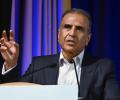
Bharti Airtel is strategically shifting its focus towards data centres, cloud services, and financial services as key drivers for its next phase of growth, leveraging significant past investments in digital infrastructure, as outlined by Chairman Sunil Mittal in the company's Annual Report for 2025-26.

'PowerBank-50 is now space proven, made in India, and ready for every satellite builder in the world.'

This is one of the coldest temperatures achieved in a research facility in India with more than 80 per cent domestically sourced components.

Tata Steel plans to invest approximately Rs 20,000 crore in capital expenditure during the current financial year (FY27), a significant increase from the previous year, with 60 per cent of this allocation directed towards its India business for expansion, new technologies, and sustainability.
